
What players, mechanics and staff do with Cuxial Chipeo, and the rules behind each part.
Installing the head unit
chipeo_radioinstalls the head unit in the car the player is standing next to. It takes a progress bar and the item is consumed. Withinstall.ownerOnly = trueonly the owner can do it.chipeo_unmountremoves it and giveschipeo_radioback. By default only the owner or whoever installed it can remove it, and only once every mounted piece has been taken off.- The installation is saved per plate.
The tablet
Inside a car with a head unit, F4 (or /chipeo) opens the tablet. The owner, or whoever installed it, can also open it from outside within remoteRange metres.
| App | What it does |
|---|---|
| Player | Now playing with spectrum and waveform, queue, previous/next, repeat, shuffle, crossfade, seek |
| Bass | Bass level, cut-off frequency and punch, heat and pressure gauges |
| Equalizer | Ten bands with a draggable curve, styles, personal presets and Compare |
| Library | USB stick: songs, lists, favourites, recent, search, import, requests |
| Equipment | Mounted pieces on a top view of the car, live dB meter, battery card, fuse reset, open/close deployable pieces |
| Vehicle | Doors, windows, hood, trunk and extras |
| Group | Create a group, invite, kick, leave |
| Settings | Appearance and the personal "Just for you" options |
Holding Alt (ui.cameraKey) frees the mouse to look around, and with ui.cameraMove = true the player can keep walking or driving.
Just for you (only affects the player who changes it): music volume, sound update rate, platform effects, streamer mode, ambient filters and visible cables. The same volume and rate can be set with /volumenmusica and /intervalomusica.
Music sources
| Source | How it plays | Equalizer and bass |
|---|---|---|
Direct link (mp3, ogg, wav, m4a, aac, flac, opus, webm) | Web audio | Yes |
| YouTube / YouTube Music | Official embedded player | Only with platform effects |
| SoundCloud | Official embedded player | Only with platform effects |
| Spotify | Looked up and played as its YouTube video | Same as YouTube |
Platform effects. With library.platformEffects = true on the server and the option enabled in "Just for you", YouTube and SoundCloud also go through the equalizer, bass, 3D audio and limiter. If the player's game client does not allow it, the source plays without effects on its own and the equalizer is locked again.
The terms of YouTube and SoundCloud do not allow altering their audio. That is why platformEffects is false by default. Staff can change it live from the panel.
USB library
- Using a USB stick inside the car inserts it. Its capacity (8 to 128) is the number of songs it holds.
- Songs travel with the stick: eject it, lend it, use it in another car or clone it onto a blank stick of equal or larger size.
- Inside the library: lists with name and cover (create, duplicate, rename, sort, delete, play), favourites, recent songs, instant search and the waveform of each direct song.
- Import a YouTube playlist: paste a link with
list=. The server reads it, skips private, deleted, live and duplicate videos, shows the progress, and then the player chooses Add to queue (no USB needed) or Save to USB (up to its capacity). Needs the YouTube key. - Share a list with a player standing next to you: it is copied to their USB if they accept.
Song requests
Players near a car with music (or passengers, depending on social.request.who) request a song from the tablet or with /pedircancion <link>. The owner gets a notice and accepts it into the queue or rejects it. Limits per player and per car are in social.request.
Sound workshop
Mounting pieces is done outside the car: /tallerchipeo or the target option Sound workshop on a car that has a head unit or pieces. The owner, whoever installed the head unit, the jobs in mechanic.jobs, the members of the workshop job and staff can use it.
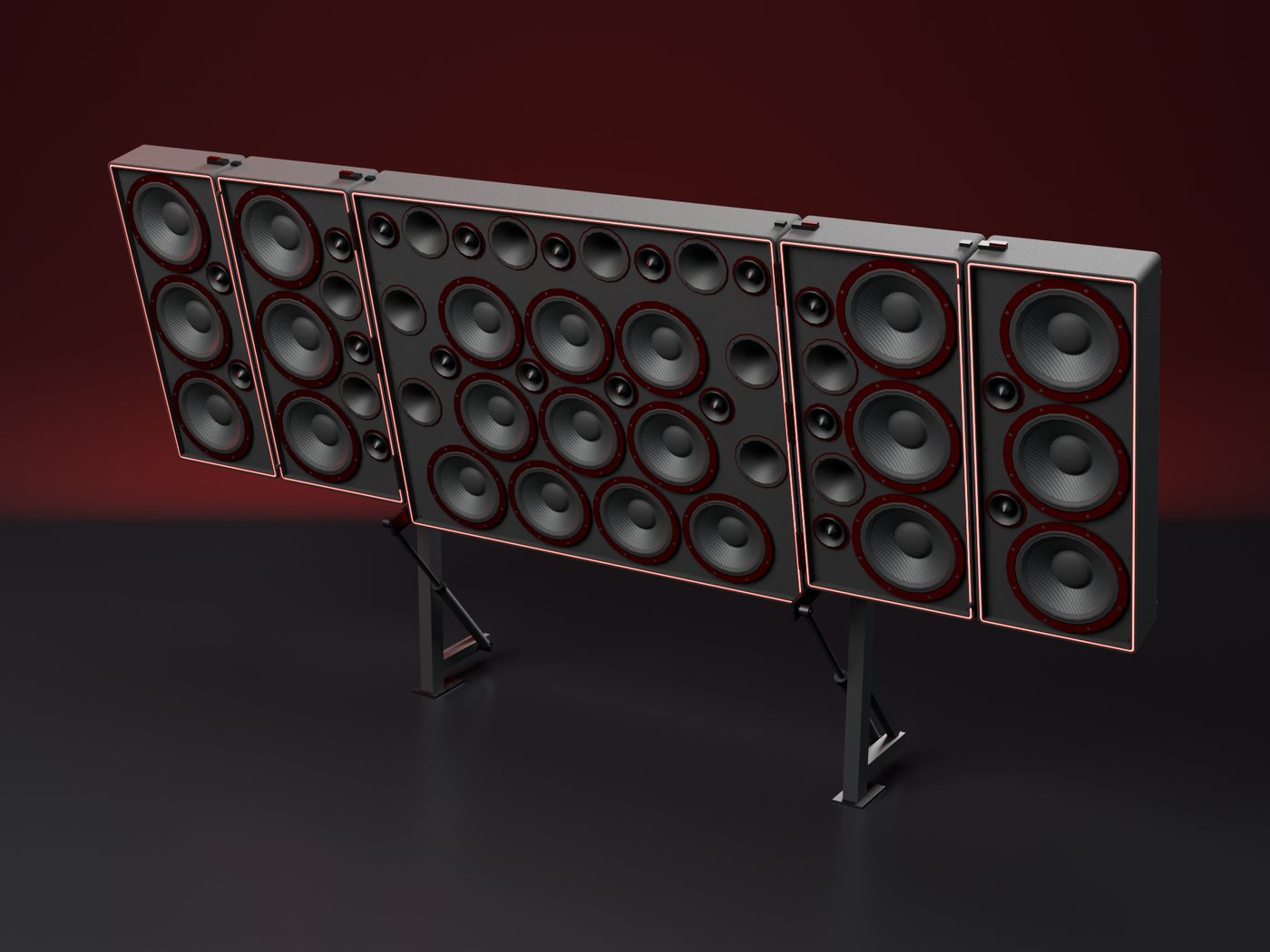
Tailgate wall deployed.
Pieces are installed with the part in your hands:
- Pick a piece from the catalogue. Only pieces in your inventory show up.
- The part goes to your hands. Large pieces (towers, tailgate walls, roof walls and the XL box) are carried in a packed box.
- Walk to the car and choose Install (piece) on it. X (
shop.carry.cancelKey) drops the part without spending anything. - Place it with the gizmo. It snaps to the bone it is placed on (chassis, trunk, roof, doors…).
- Confirm. The item is taken from the inventory only at that moment; removing the piece gives it back.
- Using a piece item from the inventory also puts it in your hands: Install appears on the nearest car.
- Workshop mechanics installing on someone else's car pick the part up at a workbench first. See Workshop business.
- Staff place pieces directly with the gizmo and need no item.
- The part is dropped when you get into a vehicle, die, walk farther than
shop.carry.maxDistancefrom the car or press the drop key.
| Family | Pieces | Where |
|---|---|---|
| Speakers | Subwoofers 10", 12", 15", 18" · mids 8", 12" · tweeter · horn | Anywhere |
| Trunk boxes | S, M, L, XL | Trunk |
| Deployable towers | S, M, L | Roof |
| Tailgate walls | S, M, L, XL | Tailgate |
| Roof walls | S, M, L, XL | Roof |
| Electrical | Amplifiers S, M, L, XL · AGM battery · 3 F capacitor · ANL fuse block · 600 A fuse block | Trunk |
| Alternators | HO 250 A · XL 350 A | Internal (no prop) |
| Connector | Portable speaker connector | Anywhere |
- Limits per car and per class are in
mounts.maxPerVehicle,mounts.maxElectricandmounts.limits. See Big builds. - Deployable pieces (towers and walls) open and close with their animation from the Equipment app. With Automatic on, they open when the music starts and close when it stops or the car goes fast.
- Cones and LEDs move with the real bass of the track.
- The sound comes from the pieces: each one has its level in dB at 1 m, and together they set how far the car is heard. Closed deployables and pieces inside a closed trunk sound muffled.
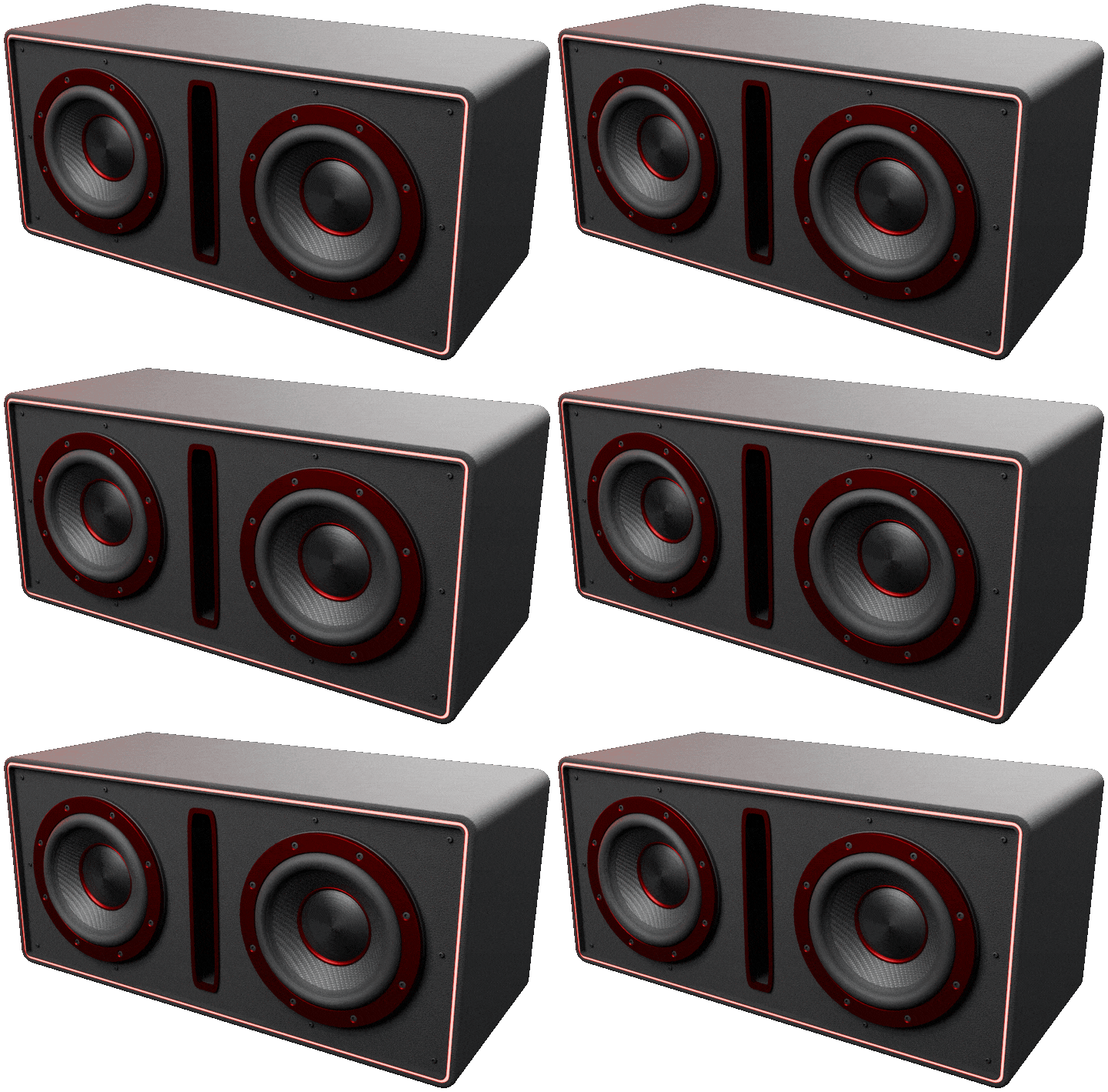
Cones follow the bass of the track.
Big builds
- Two separate counts. Sound pieces count against
mounts.maxPerVehicle(24) and electrical parts (amplifiers, batteries, capacitors, fuse blocks and alternator) againstmounts.maxElectric(10). Adding electrical parts never takes a speaker slot. - Up to 4 batteries and one alternator per car, plus the class limits of
mounts.limits. - Alternators. HO (250 A) and XL (350 A) are internal parts: they have no prop, replace the stock alternator and install with a progress bar. They do not move and have no anchor.
- Large parts. The XL amplifier gives 12,000 W and the large fuse block takes 600 A.
- Limits per model. A model in
data/vehicles.luacan raise or lower the total, the electrical count or any class withlimits. - Default position. When placing a piece, it starts at its usual spot for that model (
mountsindata/vehicles.lua). Without it, the spot is estimated from the size of the model. - The workshop advisor recommends an alternator, the XL amplifier or the fuse block that needs the fewest parts when the build asks for it.
Special project
Staff can mark a car as a Special project from the Staff panel. It is saved per plate and shows a badge in the workshop, the Equipment app and the dB meter.
- No class or total limits, up to
mounts.specialMaxpieces. - Unlimited power: no voltage drop, no flat battery, no fuse and no amplifier loss.
- No heat: the equipment never fries.
- No muffling and more volume (
sound.special).
Workshop business
A car audio shop with a public counter and, optionally, a job with mechanics, work orders, invoices and a boss. It is set in shop of shared/config.lua. Prices are set only by staff in the Staff panel.
Points
| Point | Who | What it does |
|---|---|---|
Counter (shop) | Anyone | Sound shop opens the shop: catalogue, cart and payment. Each article is paid in its own currency. |
Workbench (bench) | Workshop mechanics | Where the part is picked up before installing it on a customer's car. |
Bay (bay) | Workshop mechanics | Area where cars are worked on. With shop.bayOnly = true mechanics only install on other people's cars inside a bay. |
Office (boss) | Workshop members | Go on duty / Go off duty for everyone, and Workshop management for the boss. |
The points are created the first time from data/shop.lua (they match the workshop map). Staff move, add or delete them from the panel.
With the job
With shop.job.enabled = true, members of the workshop job work like this:
- Go on duty at the office.
- With the customer's car in a bay, open the workshop of the car and pick a piece. The catalogue shows the installation price of each piece.
- A notice at the top says to go to the workbench, and the benches are marked. At the bench, Pick up (piece) puts the part in your hands.
- Take it to the car, choose Install (piece), place it with the gizmo and confirm. A progress bar runs and the piece is added to the work order of the car.
- Repairs of fried equipment made with
/repairchipeoare added to the order too, at the repair price.
What each grade can do is set in shop.ranks: the piece types it installs, and whether it repairs, bills and opens the boss menu. While the job is active, only the boss (on duty, in a bay or near a workshop point) and staff can remove pieces.
Work order and invoice
- Each car has one open order with every installation and repair: piece, mechanic, price and total. The workshop panel of the car shows it live.
- Bill sends the order to the owner of the car, or to a nearby customer chosen by the mechanic when the owner is not there.
- The customer gets the invoice with every line and the total, chooses the account (
shop.invoice.accounts) and pays or declines it. It expires aftershop.invoice.expireMs. - Paid: the money goes to the society account of the workshop and the order is closed. Declined or expired: the order stays open and the boss sees it as unpaid.
- Mechanics cannot change any amount: installation and repair prices come from the staff panel.
Boss menu
At the office, Workshop management opens the boss menu (grades with boss = true, and staff):
| Tab | What it shows |
|---|---|
| Staff | Members with grade, online and on-duty status. Hire nearby players, raise or lower the grade of connected members, and fire members, also when they are offline. |
| Installs | Collected and uncollected amounts, income per day, most installed pieces, mechanic ranking and unpaid invoices, over the last shop.boss.statsDays days. |
| Counter | Units and income of counter sales paid in regular currencies, per day and per article. Sales in VIP currencies are only shown to staff. |
| Society | Balance of the workshop's society account. |
Without the job
With shop.job.enabled = false there are no benches, orders, invoices or boss: only the counter. Each player installs their own pieces with the part in their hands, and the jobs in mechanic.jobs keep mounting and repairing.
Electrical system
The car has a battery and an alternator. The mounted equipment draws current according to its power and the volume.
- Voltage drop. Under heavy load the voltage falls: less volume, less bass, soft clipping and lights that dim with each hit.
- Engine off. The battery drains. Below
electric.cutVoltsthe radio cuts out until the engine runs or the battery recovers. - Amplifiers. Speakers need amplifier watts. Without enough, the system loses up to 12 dB and distorts.
- Extra battery and capacitor. An AGM battery adds capacity and reduces the drop (up to 4 per car); a capacitor softens each hit.
- Alternator. An HO or XL alternator replaces the stock one and charges faster with the engine running.
- Fuse. With a fuse block, sustained overload blows the fuse and cuts the power. Reset fuse in the Equipment app uses one
chipeo_fuse. - Visible cables run between the battery, capacitor, fuse block and amplifiers: red for positive, black for negative.
Sound
- Occlusion. Only walls and buildings muffle the music, never the pieces of the car itself. Changes are smooth, and between two different interiors an open door or shutter still lets part of the sound through.
- Open windows and doors. Lowered or broken windows and open doors let the sound out of the cabin, for the owner and for everyone outside. Open beds, buggies and quads count as open.
- Several sources. Every nearby car keeps its own sources and its own position, also at a meet with many cars.
- Equalizer. Ten bands from 31 Hz to 16 kHz with a draggable curve, 11 styles and personal presets. Compare, held down, plays the track without equalizer at the same loudness, only for you. The level is compensated so that a stronger curve does not just sound louder.
- Level and limiter. A soft bass compressor keeps the kick from burying the vocals, and a limiter stops clipping at high volume.
- Close 3D sound. Nearby sources get detailed 3D audio; distant ones a simple pan, with a fade between the two.
- Same loudness across songs. Direct songs are levelled to a common loudness (
library.normalizeTarget).
Equalizers and presets saved with the six bands of earlier versions are converted to ten bands on their own the first time they are read.
Feel, heat and pressure
- Feel. The camera shakes with the bass that actually reaches the player, more inside the car, and a stopped car rocks with each hit. A dB meter shows the level live.
- Overheating. Bass too high for too long, or more power than the system can take, fries the equipment: the trunk burns and the volume and bass stay limited until a mechanic repairs it with
/repairchipeo. - Pressure. In a fully closed car at high volume, pressure builds until a window bursts.
Portable speakers (medusas)
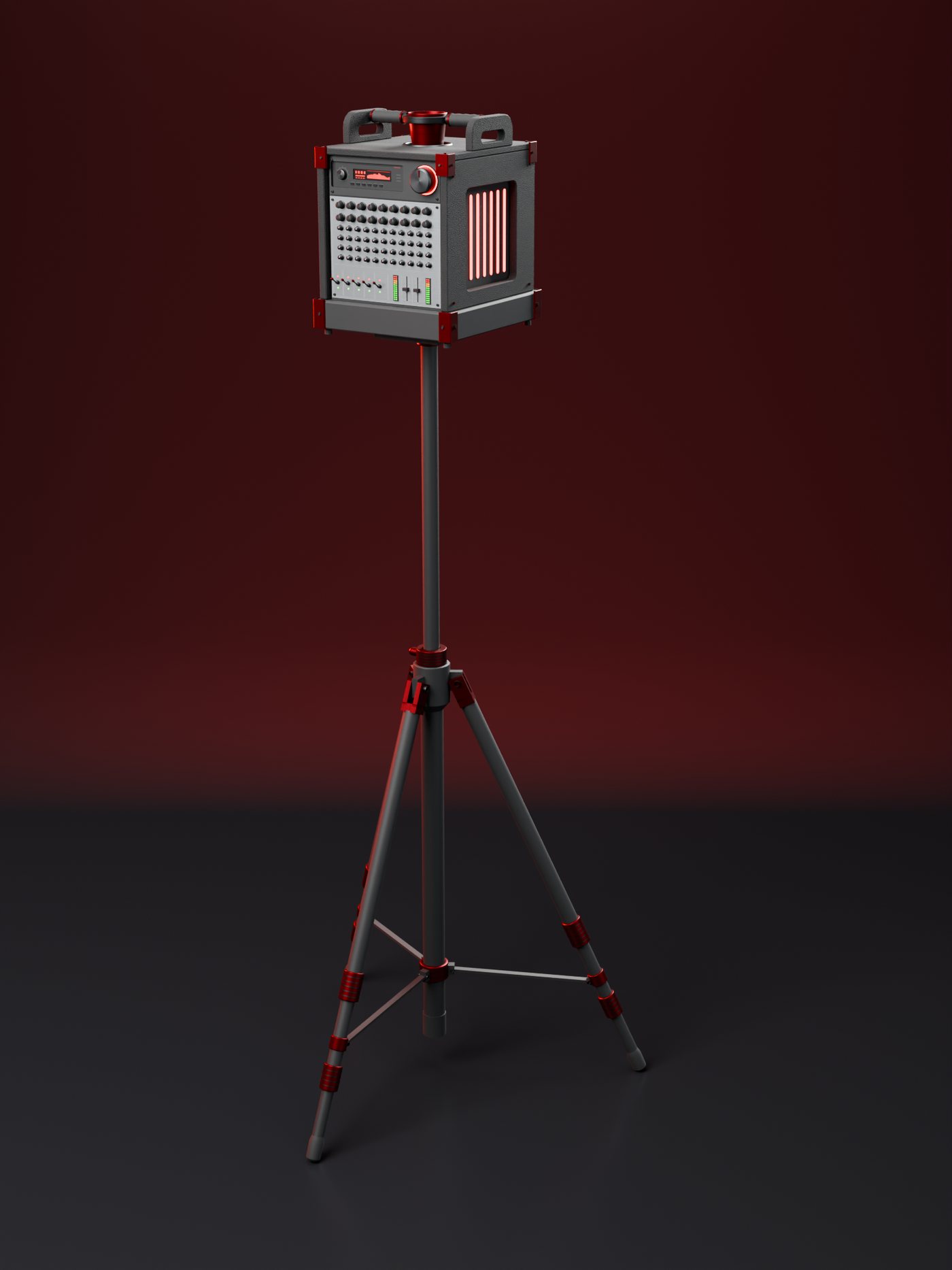
Large medusa on its tripod.
A medusa is a portable speaker that controls the radio of a car with a head unit.
- Use the item. The player carries it in the arms and a small panel appears in the corner. Hold Left Alt to use the panel while walking.
- Pair it with a nearby car that has a head unit. A cable runs from the medusa to the trunk.
- Leave it on the ground or put it on a tripod (
chipeo_medusa_pole). The tripod is placed with a ghost preview: E places, Backspace cancels, mouse wheel and arrows rotate. - Make it public so other players can control the radio from it. A private medusa only answers its owner. Adding, removing or importing songs on the USB stays with the owner, whoever installed the head unit and the players inside the car.
- Pick it up or stow it back into the inventory.
- If the medusa moves farther than the cable length (
medusa.cable.length) it unplugs and control is lost; it plugs back in on its own withinmedusa.cable.reconnectmetres. - The medusa panel has Radio, Mix, Queue, Equipment, Car and Lists tabs.
- Target options on a medusa: pick up, open panel, make public/private; on a tripod: put the medusa on it, move it, fold and stow it.
Groups
The owner of a car with music creates a group in the Group app and invites nearby cars with a head unit or medusas plugged into one. Members owned by the same player join directly; others accept or reject.
- Every member plays the master's track at the same moment (pause, seek, next and crossfade included), each with its own volume, equalizer, pieces and 3D position.
- A member leaves the group when it moves farther than
groups.maxDistance. The group is disbanded when the owner leaves or the master disappears.
Fixed installations
Sound systems that live in the world: clubs, events, businesses. Staff build them from the Staff panel: a controller (a medusa prop or an invisible zone) plus pieces from the catalogue, placed with the gizmo. Players use them through the target option on the controller, with the same tablet, according to their permissions and schedule.
Streamer mode
With Streamer mode on in "Just for you", the player does not hear tracks with rights (YouTube licensed content, Spotify, and what the server marks in library.streamer). They hear silence, or the replacement track if one is configured, and see "Muted by streamer mode". Everyone else hears normally. The server can force it for everyone with library.streamerForced.
Routing buckets
With buckets.enabled = true, each player only hears and controls cars, medusas and installations in their own routing bucket. Groups only join equipment of the same bucket.